How Long Does Teeth Whitening Last? Everything You Need to Know Before and After Treatment
Teeth whitening is one of those treatments where the result is immediately obvious — you finish treatment, look in the mirror and the difference is clear. But the first question most patients ask once the initial excitement settles is a practical one: how long does teeth whitening last?
The honest answer is that it depends. It depends on the type of whitening used, the degree of shade change achieved, your diet and lifestyle, and whether you maintain the results with occasional top-up treatments. Most patients see their results last anywhere from six months to three or more years — and with the right maintenance habits, some keep their teeth noticeably whiter indefinitely.
This guide gives you the complete, clinically accurate picture: how different whitening methods compare for longevity, what causes the colour to fade, how to make your results last as long as possible, and why starting with a thorough dental check-up is the right first step before any whitening treatment.
At Smile Perfections in Oadby, Leicester, led by Dr Juttes Pallipatt GDC No. 104499 and Dr Pratima Pallipatt GDC No. 101258, we carry out teeth whitening as part of a broader approach to smile improvement — always making sure the treatment is appropriate, the result is achievable and the longevity is realistic for each individual patient.
How Does Teeth Whitening Actually Work?
Before getting into longevity, it helps to understand the mechanism — because the chemistry behind whitening directly explains why results fade and what you can do about it.
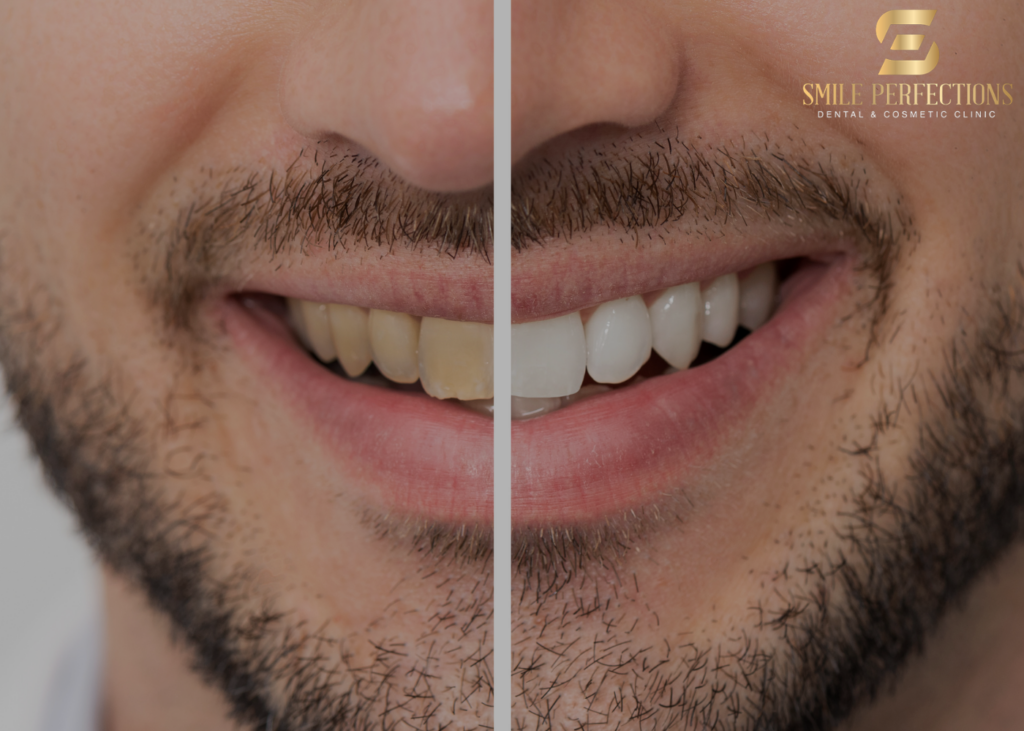
The active ingredient in professional teeth whitening is hydrogen peroxide or carbamide peroxide (which breaks down into hydrogen peroxide). These peroxide compounds penetrate the enamel and the dentine beneath, where they react with the chromogen molecules responsible for tooth discolouration. This oxidation reaction breaks apart the pigment chains that create the yellow, brown or grey tones, producing a lighter, brighter result.
Crucially, this process does not alter the physical structure of the tooth — it changes the optical properties of the molecules within it. This is important because it means the effect is not permanent: new dietary staining compounds continue to be absorbed into the tooth over time, and the natural ageing process continues to darken the dentine beneath the enamel. The whitening result fades as these processes accumulate.
It also means that whitening is effective on natural tooth structure — enamel and dentine — but has no effect on existing restorations such as composite bonding, porcelain veneers or crowns. If you have tooth-coloured restorations on visible teeth, these will not whiten along with your natural teeth, which is an important clinical consideration before treatment.
How Long Does Teeth Whitening Last? By Treatment Type
Professional Home Whitening (Custom Tray Whitening)
Professional home whitening — where custom-fitted trays are made from impressions or digital scans of your teeth and used with a prescription-strength whitening gel — is the most commonly offered form of professional whitening and delivers excellent, controllable results.
How long the results last: Typically one to three years before a noticeable return of discolouration, depending on diet and lifestyle. Many patients maintain their results almost indefinitely by using their top-up gel for a few nights every three to six months — a practice called maintenance whitening.
Why custom trays matter: A properly fitted custom tray holds the gel in close, consistent contact with the tooth surface and minimises gel contact with the gum tissue — which is important for both effectiveness and safety. Over-the-counter whitening strips and generic trays do not fit as precisely, resulting in uneven gel distribution, gel leakage onto the gums, and less predictable results.
The gel concentration: Professional whitening gels used in custom tray systems typically contain between 6% and 16% hydrogen peroxide equivalent (depending on the system). The EU and UK regulations that govern dentist-prescribed whitening allow significantly higher concentrations than the 0.1% limit on over-the-counter products — which is the primary reason professional whitening achieves results that shop-bought products cannot.
At Smile Perfections, custom tray whitening is prescribed and supplied following a proper assessment of the teeth and gums — ensuring the whitening is appropriate, achievable and safe for each patient’s specific situation.
In-Practice Power Whitening
In-practice whitening involves a high-concentration gel applied to the teeth in the dental chair, sometimes accelerated with a light or laser. The result is visible after a single appointment — making it the choice for patients who want an immediate, dramatic change before an event or deadline.
How long the results last: The results from power whitening alone tend to be slightly shorter-lived than custom tray whitening — often six to twelve months before significant colour reversion — because the intensity of the initial treatment can produce some dehydration of the enamel that temporarily makes teeth appear whiter than their final settled shade, and because there is no ongoing maintenance mechanism built into the process.
The combination approach: The most effective protocol for longevity combines in-practice whitening for an immediate result with custom take-home trays for maintenance. The in-practice treatment provides the initial dramatic change; the take-home trays allow patients to maintain and periodically refresh the result over subsequent months and years.
Over-the-Counter Whitening Products
This category includes whitening strips, whitening toothpastes, whitening mouthwashes and generic whitening kits purchased online or in pharmacies.
How long the results last: In most cases, very little noticeable change is achieved at all. UK-legal over-the-counter whitening products are restricted to hydrogen peroxide concentrations of 0.1% or below — a level that can remove some surface staining but cannot produce the shade change that patients typically want when they consider teeth whitening. Results, where they occur, are minimal and short-lived.
Whitening toothpastes: These work primarily through mild abrasive action and surface-acting agents that remove extrinsic staining from the tooth surface. They can maintain results achieved through professional whitening between top-up treatments, but they cannot produce new whitening results on their own to any meaningful degree.
The key distinction is between extrinsic staining (surface deposits of pigment from food, drink and tobacco) — which surface-active products can partially address — and intrinsic discolouration (pigment within the enamel and dentine) — which only penetrating peroxide compounds can reach and alter.
What Causes Teeth Whitening Results to Fade?
Understanding what shortens the lifespan of your whitening results is the key to making those results last longer.
Dietary Staining
The most significant driver of colour reversion is dietary. The same foods and drinks that stained the teeth before whitening will continue to stain them afterwards. The most potent culprits are:
- Coffee and tea: Particularly important because of the frequency of consumption for most people. Even two cups of coffee a day adds up to significant cumulative staining over months.
- Red wine: Contains tannins and chromogens that are particularly effective at staining enamel.
- Fruit juices and soft drinks: The acidity temporarily softens the enamel surface and allows staining compounds to penetrate more readily.
- Foods with strong pigments: Soy sauce, balsamic vinegar, beetroot, berries, tomato-based sauces.
- Tobacco: Both smoking and smokeless tobacco products cause significant, persistent discolouration that responds poorly to whitening.
The 48 hours immediately following whitening treatment are particularly important. Freshly whitened teeth have temporarily more open dentinal tubules, making the enamel slightly more porous and more susceptible to staining compounds during this period. The standard clinical advice is to follow a “white diet” for the first 48 hours — avoiding anything that would stain a white shirt.
The Natural Ageing Process
As we age, the dentine layer within the tooth gradually darkens. This is a natural biological process independent of diet: the dentine thickens and its optical properties change, and because dentine shows through the enamel (particularly as enamel thins with age), teeth appear progressively more yellow or grey over time.
Teeth whitening addresses this effectively, but the ageing process continues after treatment — which is why periodic top-up treatments are part of the long-term maintenance picture.
Enamel Thinning
Enamel is semi-transparent. As it thins — through acid erosion, tooth grinding (bruxism) or normal long-term wear — the darker dentine beneath becomes more visible. Whitening can improve the appearance significantly, but very thin enamel limits the degree of achievable whitening and makes the result shorter-lived.
Medications
Certain medications can cause tooth discolouration that is particularly resistant to whitening — tetracycline antibiotic staining being the most clinically significant example. While whitening can improve tetracycline-stained teeth, the results are more limited and require longer treatment courses than standard extrinsic or age-related discolouration.
Fluorosis
Dental fluorosis — caused by excessive fluoride intake during tooth development — can produce white spots, brown staining or a mottled appearance that responds variably to whitening. In some cases whitening can reduce the contrast between affected and unaffected areas; in others, alternative approaches such as composite bonding or microabrasion are more appropriate.
How to Make Teeth Whitening Last Longer
The 48-Hour Rule After Treatment
Follow a white diet for the first two days following whitening. Stick to foods and drinks that are white, clear or pale in colour: water, milk, white rice, pasta, chicken, fish, bananas, yoghurt. Avoid coffee, tea, red wine, coloured sauces and anything with strong pigmentation during this critical window.
Drink Through a Straw
For cold drinks that are likely to stain — coffee iced drinks, fruit juices, soft drinks — using a straw reduces direct contact between the liquid and the tooth surfaces, slowing the rate of staining accumulation. It is a small habit that makes a measurable difference over time.
Rinse After Staining Foods and Drinks
If you are going to have coffee or red wine, rinsing with plain water immediately afterwards is the most practical way to reduce staining. This dilutes and washes away some of the chromogens before they have time to adhere to the enamel.
Do not brush immediately after eating or drinking acidic foods — wait at least 30 minutes for the enamel to remineralise from any temporary softening.
Use a Good Whitening Toothpaste (Correctly)
A whitening toothpaste will not extend the underlying whitening result, but it helps remove surface staining before it can accumulate and dull the appearance. Choose one with a moderate RDA (relative dentine abrasivity) score — aggressive abrasive toothpastes can increase sensitivity and cause enamel wear over time.
Attend Regular Hygiene Appointments
Dental hygienist appointments include a professional polish that removes surface staining deposits that brushing cannot clear. This is one of the most consistently effective ways to maintain the appearance of whitened teeth between top-up sessions — keeping the surface clean and stain-free so the underlying whitening result remains visible.
The hygienist can also monitor the condition of the enamel over time and flag any areas of concern — such as early acid erosion or significant wear — that might affect the longevity of whitening results or the suitability of future whitening treatment.
Top-Up Whitening
The most effective way to maintain the result of professional teeth whitening long-term is periodic top-up treatment using the custom trays provided with the original treatment. Most patients find that using their whitening gel for one to three nights every three to six months keeps their teeth at a consistently bright shade — effectively preventing the accumulated fading that otherwise makes whitening seem to “wear off.”
This is the key advantage of custom tray whitening over other formats: the trays are reusable indefinitely, and top-up gel is inexpensive compared to a full course of treatment. The initial investment in a proper whitening system pays dividends over many years of maintained results.
Starting Right: Why a Dental Check-Up Comes First
One of the most important clinical points about teeth whitening is that it should never be carried out without a proper assessment of the teeth and gums first.
There are several reasons for this:
- Active decay: Whitening gel is an oxidising agent. Applied to a tooth with a cavity, the gel can penetrate through the decayed area and reach the pulp — causing pain and potentially damaging the nerve. Any decay must be treated before whitening begins.
- Gum disease: Whitening gel in contact with inflamed or bleeding gum tissue causes sensitivity and can worsen the gum condition. The gums need to be healthy before whitening is appropriate.
- Existing restorations: As noted earlier, whitening has no effect on composite, porcelain or ceramic restorations. If you have visible tooth-coloured restorations on the front teeth, whitening the natural teeth around them will create a mismatch. This needs to be discussed and planned for — either by accepting the mismatch, by whitening first and then replacing the restoration to match, or by an alternative approach.
- Sensitivity: Patients with existing dentine sensitivity need their suitability for whitening assessed. Modified protocols — lower concentration gel, shorter wear times, desensitising gel used alongside — can make whitening achievable for sensitive patients, but this requires clinical judgment.
At Smile Perfections, Dr Juttes Pallipatt and Dr Pratima Pallipatt assess every whitening patient at a dental check-up before prescribing treatment. This is not a formality — it is a clinical necessity that protects you and ensures the whitening achieves the result you want without causing problems.
Teeth Whitening and Composite Bonding: The Right Sequence
For patients considering both teeth whitening and composite bonding — either to address chips, gaps or shape irregularities alongside colour improvement — the sequence matters significantly.
Always whiten first, bond second. This is the correct clinical order for a simple reason: composite resin does not whiten. If bonding is placed first and then the surrounding natural teeth are whitened, the composite will no longer match and will need to be replaced to maintain a uniform appearance.
By whitening first, allowing the shade to stabilise over two to three weeks, and then matching the composite to the whitened teeth, the result is cohesive and long-lasting. Dr Juttes Pallipatt and Dr Pratima Pallipatt plan this sequencing at Smile Perfections as standard whenever both treatments are being considered.
The Bottom Line
How long does teeth whitening last? With professional treatment using custom trays, most patients see their results lasting one to three years before significant fading. With periodic maintenance top-ups every three to six months, those results can be maintained almost indefinitely. The single biggest factors affecting longevity are diet and whether you use your maintenance gel.
The right starting point is always a thorough dental check-up to ensure whitening is appropriate, achievable and safe for your specific teeth — followed by a prescription whitening system from an experienced clinical team.
At Smile Perfections in Oadby, Leicester, Dr Juttes Pallipatt GDC No. 104499 and Dr Pratima Pallipatt GDC No. 101258 provide professional teeth whitening as part of a comprehensive approach to smile improvement — with honest advice on what you can expect and how to make the most of your results long-term.
Patients frequently ask
With professional custom tray whitening, most patients maintain a noticeably whiter result for one to three years without any maintenance treatment. With periodic top-up use of the whitening gel (a few nights every three to six months), the results can be maintained for much longer — many patients keep their teeth at a consistently bright shade for many years after their initial teeth whitening treatment. Longevity depends primarily on diet, lifestyle and maintenance habits.
Yes — significantly. UK-legal over-the-counter products are restricted to 0.1% hydrogen peroxide equivalent, which achieves minimal whitening of the underlying tooth structure. Professional whitening prescribed by a dentist at Smile Perfections uses considerably higher concentrations, producing a genuine shade change within the enamel and dentine that lasts months to years rather than days. Shop-bought products are better suited to surface maintenance between professional treatments than to achieving new whitening results.
Colour reversion after whitening is normal and expected. The two primary drivers are dietary staining — coffee, tea, red wine and other pigmented foods and drinks being absorbed into the enamel surface — and the natural ageing process, in which dentine gradually darkens over time. This is not a sign that the treatment has failed; it is the normal progression that periodic top-up whitening is designed to address. A regular hygienist appointment also helps by removing surface staining before it accumulates.
This depends on where the restorations are. Composite resin and porcelain do not respond to whitening agents — so if you have visible tooth-coloured restorations on your front teeth, whitening the natural teeth around them will create a shade mismatch. The correct approach is to whiten first, allow the shade to stabilise, and then replace any restorations that no longer match. At Smile Perfections, this is assessed at a dental check-up and planned accordingly, including if you are considering composite bonding alongside whitening.
The most effective maintenance strategy is: use your custom whitening trays with top-up gel for a few nights every three to six months; follow a white diet for 48 hours after each whitening session; use a straw for staining drinks; rinse with water after coffee or red wine; attend regular dental hygienist appointments for professional polishing; and use a quality whitening toothpaste to keep the surface stain-free between sessions. The combination of these habits, built around periodic professional top-up whitening, is the most reliable way to keep your smile looking its best long-term.
Medical and dental information disclaimer
The information in this article is intended for general guidance only and does not constitute personalised dental or medical advice. Suitability for teeth whitening and expected results depend on individual clinical circumstances and should be assessed by a qualified dental professional before treatment begins.
Smile Perfections is a private dental practice in Oadby, Leicester, led by Dr Juttes Pallipatt GDC No. 104499 and Dr Pratima Pallipatt GDC No. 101258. We offer professional teeth whitening, dental check-ups, dental hygiene appointments, composite bonding, Invisalign, porcelain veneers, dental crowns, sedation and smile makeovers.