Blister in Mouth from Braces: Why It Happens, How to Manage It, and When to Get Help
Starting orthodontic treatment is exciting. The idea of straighter, more confident teeth at the end of the process makes it worth it — but the early weeks can be uncomfortable in ways that nobody fully warns you about.
One of the most common complaints from patients in the early stages of orthodontic treatment is a blister in the mouth from braces. It looks alarming, can be genuinely sore, and almost always arrives at the most inconvenient moment — usually when you are already adjusting to a mouth full of new hardware.
The reassuring news is that this is normal, expected and manageable. This guide explains exactly why blisters form during orthodontic treatment, what to do about them, which products and home remedies actually help, and when the blister is a sign that you need to contact your dentist or orthodontist.
At Smile Perfections in Oadby, Leicester, led by Dr Juttes Pallipatt GDC No. 104499 and Dr Pratima Pallipatt GDC No. 101258, we provide a full range of orthodontic treatments and guide patients through every stage of the process — including the parts that nobody talks about quite as much.
Why Do Blisters Form in the Mouth from Braces?
To understand why blisters develop, it helps to understand what is happening to the soft tissue of your mouth during orthodontic treatment.
The inner lining of the cheeks, lips and gums — the oral mucosa — is soft, well-vascularised tissue that is not designed to be in constant contact with metal brackets, wires, plastic aligners or any kind of foreign hardware. When any of these surfaces rubs repeatedly against the same area of mucosa, it creates friction. That friction causes localised trauma to the surface cells, leading to inflammation, swelling of the tissue, and eventually the formation of a fluid-filled blister or, once it ruptures, an open ulcer.
This is essentially the oral equivalent of a friction blister on the heel of your foot from a new pair of shoes. Your mouth has not yet adapted to the presence of the appliance, and the soft tissue that takes the brunt of that friction responds by blistering.
Why the First Few Weeks Are the Worst
The tissues of the mouth do toughen over time. This is not just anecdotal — the mucosa genuinely adapts to repeated low-level friction by developing a mild degree of keratinisation (thickening of the surface layer), which provides better protection against the appliance. Most patients find that blisters and friction-related soreness improve significantly after the first four to six weeks of treatment, even though the appliance is still present.
The early weeks are the worst because:
- The tissue has had no previous exposure to this kind of friction
- The appliance is at its most unfamiliar — the tongue, cheeks and lips are not yet adapted to moving around it naturally
- Adjustment appointments in the early phase tend to be more frequent, and each adjustment increases pressure and friction temporarily
This does not mean you simply have to suffer. It means there are specific, effective things you can do to protect the tissue and manage the discomfort while your mouth adapts.
Types of Braces and Their Specific Blister Risks
Not all orthodontic appliances cause blisters in the same way. Understanding which parts of which appliance are most likely to cause friction helps you protect the right areas.
Traditional Fixed Braces
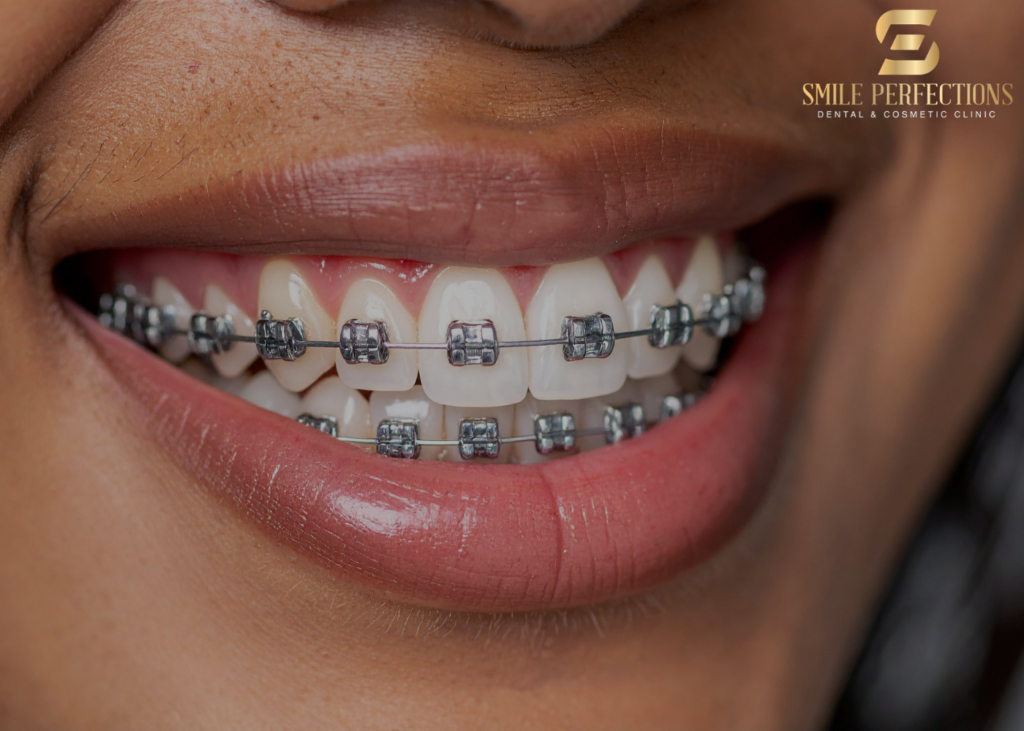
Traditional metal or ceramic fixed braces — with brackets bonded to each tooth and a wire running between them — are the most common source of blisters in the mouth from braces. The most problematic areas are:
- Bracket edges: The corners and wings of each bracket are relatively sharp and can catch on the inner cheek tissue, particularly during the early weeks before the cheeks learn to move around them.
- Wire ends: The ends of the archwire at the back of the mouth are notorious for poking into the cheek or gum tissue. As the wire straightens the teeth, its end can shift position and emerge from the tube at the back molar, creating a sharp point that causes repeated friction or actual puncture trauma.
- Ligatures and ties: The small elastic or metal ties that hold the wire to the brackets can occasionally become displaced and poke the surrounding tissue.
Damon Braces
Damon braces use a self-ligating bracket system — the wire clips into the bracket rather than being held by elastic ties. This produces lower friction along the wire itself, which is one of the clinical advantages of the system. However, the bracket edges and wire ends still present the same friction risks as traditional fixed braces, and blisters in the mouth remain a common early-treatment experience.
Six Month Smiles
Six Month Smiles uses tooth-coloured brackets and wires to straighten the front teeth, typically over a shorter treatment period. Because the focus is on the aesthetic zone — the teeth most visible when you smile — the brackets and wire sit in the area most in contact with the inner lips, making lip blisters a particularly common complaint in the early weeks.
Inman Aligner
The Inman Aligner is a removable appliance that uses two opposing springs to gently squeeze the front teeth into alignment. It has metal bows that sit against the front surfaces of the teeth and can rub against the inside of the lips. Early treatment blisters on the inner lips are common with this appliance, though the ability to remove it for eating provides some respite.
Invisalign and Clear Aligners
Invisalign aligners are made from smooth, trimmed-to-the-gum-line plastic — and as a result, they cause significantly less soft tissue irritation than fixed appliances. Blisters are less common with Invisalign, but they are not impossible. The edges of the aligner, particularly if they are not perfectly smooth, can occasionally irritate the gum line or the inner lip tissue. Attachments — the small tooth-coloured composite buttons bonded to specific teeth to help tooth movement — can also occasionally cause localised friction.
If the edge of an Invisalign tray is causing consistent irritation, it can often be gently smoothed with a nail file or by your orthodontist. This is worth mentioning rather than simply tolerating.
What Does a Blister from Braces Look and Feel Like?
A blister in the mouth from braces typically has a clear, white or yellowish fluid-filled appearance, set against the reddened surrounding tissue. It is usually on the inner cheek, the inner lip or the gum tissue alongside a bracket or wire end.
Before the blister forms, patients often notice:
- A rough, sore spot in a specific location — the first sign that friction is occurring
- Localised redness and mild swelling of the mucosa in the area
- Sensitivity when the cheek or lip moves across the appliance in that area
Once the blister forms, it may remain intact for a day or two before rupturing. When it ruptures, it becomes an open ulcer — a shallow, white or greyish-yellow erosion with a red border that is typically more painful than the intact blister. These ulcers, once formed, heal within seven to fourteen days if the source of friction is managed.
How to Manage a Blister in the Mouth from Braces
Orthodontic Wax: Your First and Best Tool
Orthodontic wax is the single most effective immediate measure for a blister in the mouth from braces. It is a soft, pliable dental wax that you roll into a small ball and press over the bracket, wire end or any sharp point that is causing friction. The wax creates a smooth, rounded surface that the cheek tissue can glide over rather than being caught by the edge beneath it.
How to use it correctly:
- Dry the bracket or wire end with a tissue or dry cloth — wax does not adhere well to wet surfaces
- Roll a small piece of wax between your fingers until it is warm and pliable
- Press it firmly over the offending part of the appliance and shape it to sit smoothly
- Replace it whenever it falls off or becomes ineffective — typically several times a day in the early weeks
Orthodontic wax is available from pharmacies, most supermarkets and is usually provided by your orthodontist. It is safe to accidentally swallow small amounts.
Warm Salt Water Rinses
Warm salt water is mildly antiseptic and soothing for inflamed oral tissue. Half a teaspoon of table salt dissolved in a glass of warm water, rinsed gently around the mouth two to three times a day, keeps the ulcerated area clean, reduces bacterial load and supports healing. It is not a dramatic intervention, but it is consistently effective and has no side effects.
Topical Anaesthetic Gels
Benzocaine-containing gels (available from pharmacies under various brand names) can be applied directly to the ulcer or blister to provide temporary surface numbing. This is particularly useful before meals, when the movement involved in chewing aggravates the sore area.
A cotton bud works well for precise application — place a small amount directly on the ulcer, allow it to absorb for a moment, and then eat. Relief typically lasts 15 to 30 minutes.
Antiseptic or Protective Gels
Chlorhexidine-based gels (such as Corsodyl gel) can be applied to ulcers to reduce the bacterial load and support healing. Some purpose-designed oral wound products — including Orabase and similar barrier gels — create a protective film over the ulcer that both protects it from further irritation and reduces pain during eating.
Over-the-Counter Pain Relief
Ibuprofen is the most effective OTC choice for braces-related soreness — it reduces both pain and the inflammatory component of the tissue response. Take with food, at the recommended dose, as needed during the periods of most discomfort. For patients who cannot take ibuprofen, paracetamol is a suitable alternative.
Dietary Adjustments
During an acute blister or ulcer episode, adjusting your diet temporarily makes a real difference:
- Eat soft foods — the less chewing required, the less the cheek and lip tissue moves against the appliance
- Avoid hard, crunchy foods that require significant biting and place the cheek under pressure against brackets
- Avoid spicy and acidic foods — these are potent irritants to already inflamed mucosal tissue (citrus, tomatoes, vinegar, very spicy sauces)
- Avoid very hot food and drink — heat increases inflammation in already irritated tissue
This is temporary. Once the ulcer heals and the tissue adapts to the appliance, your normal diet (within the constraints your orthodontist has set for your specific appliance) can resume.
When to Contact Your Dentist or Orthodontist
Most blisters in the mouth from braces are manageable at home and resolve within one to two weeks. However, there are specific situations that warrant a call or appointment:
A wire end is poking into the tissue. This is one of the most common mechanical causes of braces-related blisters and is something your orthodontist can fix quickly — either by cutting the wire end or by bending it out of the way. Do not try to cut the wire yourself. In the meantime, orthodontic wax provides temporary protection.
A bracket has come loose. A detached bracket can shift position and create friction in areas it was not previously touching, causing new blisters. A loose bracket also reduces the effectiveness of treatment. Contact your orthodontist to arrange a repair appointment.
The blister or ulcer has not healed after three weeks. As with all oral soft tissue changes, a persistent lesion that does not resolve within three weeks should be properly assessed. This is not expected with a typical braces blister, but it is the appropriate clinical threshold for seeking assessment.
You have developed a fever or significant facial swelling alongside oral blistering. This would suggest an infection rather than simple friction trauma and needs same-day attention.
The pain is severe and unmanageable. Braces-related blisters are uncomfortable, but if pain is severe enough to be significantly affecting your daily life and is not responding to the measures above, your orthodontist can review whether the appliance needs adjustment.
At Smile Perfections, patients undergoing orthodontic treatment with us have access to advice and support throughout — not just at formal review appointments.
Preventing Blisters in the First Place
Prevention is never fully guaranteed with braces, but the following measures reduce both the frequency and severity of blisters in the mouth from braces:
Use wax proactively. Do not wait until a blister has formed before using orthodontic wax. In the first few weeks, identify the brackets and wire ends most likely to cause friction and apply wax before problems develop. Prevention is considerably more comfortable than treatment.
Maintain excellent oral hygiene. Healthy gum tissue and oral mucosa with good blood supply and low bacterial load heals faster and is more resilient than tissue compromised by plaque-related inflammation. Regular dental hygienist appointments throughout your orthodontic treatment keep the gum tissue healthy and remove the plaque that braces make harder to clean. This is strongly recommended for all orthodontic patients — not just those who have blisters.
Keep up with regular dental check-ups. Dental check-ups during orthodontic treatment allow the dental team to check the condition of the soft tissue alongside the teeth and appliance — identifying any areas of chronic friction or early soft tissue change before they become a significant problem.
Avoid habits that increase friction. Biting on pens, chewing on nails, or any habit that puts the cheek or lip in repeated contact with the appliance increases the likelihood of blister formation. Breaking these habits during orthodontic treatment is clinically beneficial beyond just the blistering risk.
Is There a Less Irritating Alternative to Fixed Braces?
For patients who are experiencing significant soft tissue problems with fixed appliances, or who are concerned about this before starting treatment, it is worth knowing that different orthodontic systems vary considerably in their irritation profile.
- Invisalign in particular is associated with significantly less soft tissue irritation than fixed braces. The smooth plastic aligners have no brackets, no wire ends and no metal edges — and because they are removed for eating and cleaning, the mucosa gets regular recovery time. For patients who have a history of oral ulceration or who are particularly concerned about blistering and soft tissue discomfort, Invisalign is genuinely worth discussing at a consultation.
- Damon braces reduce the friction within the bracket system (wire-to-bracket friction), which is associated with gentler forces and potentially less acute soreness after adjustments compared to traditional braces — though the surface-to-tissue friction risks remain similar.
- Inman Aligner — being removable — allows patients to manage friction-related soreness by taking it out temporarily during acute episodes, while still progressing with treatment when wearing it. Wearing time requirements are typically 16 to 20 hours per day.
- Six Month Smiles uses smaller, tooth-coloured brackets and finer wires — and because treatment is focused and shorter in duration, the overall period of exposure to orthodontic irritation is reduced.
At Smile Perfections, Dr Juttes Pallipatt and Dr Pratima Pallipatt take the time at the consultation stage to discuss which orthodontic option is the right match for your teeth, your lifestyle and your tolerance for appliance-related discomfort. There is no single right answer — the best system is the one that achieves your clinical goals while being something you can wear consistently and comfortably throughout treatment.
Composite Bonding as a Post-Orthodontic Step
Many patients completing orthodontic treatment find that their teeth, while now straight, have minor remaining imperfections — chips, worn edges, slight variations in shape or colour — that they want to refine. Composite bonding is an ideal post-orthodontic treatment for exactly this: a quick, minimally invasive procedure that adds composite resin to the tooth surface to improve shape, length or colour without any drilling in most cases.
The sequence works well because orthodontics establishes the alignment and proportion of the teeth, and composite bonding then fine-tunes the aesthetics. Getting the alignment right first means less composite is needed and the result looks more natural. At Smile Perfections, this kind of treatment sequencing is something we plan from the start — so the end result is something patients are genuinely delighted with.
The Bottom Line
A blister in the mouth from braces is an extremely common part of orthodontic treatment, particularly in the early weeks. It is caused by friction between the appliance and the oral mucosa, is almost always self-limiting, and can be effectively managed with orthodontic wax, saltwater rinses, topical gels and temporary dietary adjustments.
The tissue does adapt. The first four to six weeks are typically the worst, and most patients find the frequency and severity of blisters reduces significantly as the mouth becomes accustomed to the appliance.
Where blisters are persistent, a wire end is the cause, or a blister has not healed after three weeks — contact your dental team. And if the discomfort of fixed appliances is a genuine concern before starting treatment, Invisalign and other removable options offer a significantly gentler experience for many patients.
At Smile Perfections in Oadby, Leicester, Dr Juttes Pallipatt GDC No. 104499 and Dr Pratima Pallipatt GDC No. 101258 support patients through every stage of orthodontic treatment — from the consultation that identifies the right system, through the check-ups and hygienist appointments that keep everything on track, to the finishing touches that make the final result everything it should be.
Patients frequently ask
A typical blister in the mouth from braces heals within one to two weeks once the source of friction is managed — usually by applying orthodontic wax over the offending bracket or wire. The ulcer that forms after the blister ruptures heals in the same timeframe. If a blister or ulcer has not healed within three weeks, it should be assessed at a dental check-up rather than left to resolve on its own.
Yes — it is one of the most common experiences in the early weeks of orthodontic treatment, regardless of which type of appliance is used. The inner cheek, inner lips and gum tissue are not accustomed to the presence of brackets, wires or aligners, and friction between the appliance and the mucosa produces blistering. The tissue adapts over time and blisters typically become less frequent after the first four to six weeks. Orthodontic wax, used proactively, significantly reduces both the frequency and severity of blisters.
Generally, yes. Invisalign aligners have smooth edges with no brackets or wire ends, which removes the primary mechanical causes of braces-related blistering. Soft tissue irritation does occur with Invisalign — particularly along the gum line if aligner edges are not perfectly smooth — but it is significantly less common and typically less severe than with fixed appliances. For patients who are concerned about blistering and soft tissue discomfort, Invisalign is worth discussing at a consultation with Dr Juttes Pallipatt or Dr Pratima Pallipatt at Smile Perfections.
Apply orthodontic wax over the wire end immediately for temporary protection and contact your orthodontist to arrange an appointment to trim or bend the wire. This is a common and quickly resolved issue — do not try to cut the wire yourself, as this can cause additional problems. In the meantime, wax will protect the tissue and allow the blister to begin healing. Damon braces and other self-ligating systems still have wire ends and are subject to the same issue — it is something that affects all wire-based appliances.
Mostly at the start, though blisters can return at any adjustment appointment when the wire is changed or tightened. The first four to six weeks are typically the worst — after that, the tissue adapts considerably and most patients experience far less frequent blistering. Adjustment appointments can trigger a return of mild soreness and occasionally a new blister in the area of most change, but these are shorter-lived as treatment progresses. Maintaining regular dental hygienist appointments throughout treatment keeps the surrounding tissue in the best possible condition to recover quickly from any adjustment-related soreness.
Medical and dental information disclaimer
The information in this article is intended for general educational guidance only and does not constitute personalised dental or medical advice. For concerns about your orthodontic appliance or oral health during treatment, please contact your dental practice for a proper clinical assessment.
Smile Perfections is a private dental practice in Oadby, Leicester, led by Dr Juttes Pallipatt GDC No. 104499 and Dr Pratima Pallipatt GDC No. 101258. We offer Invisalign, Damon braces, Inman Aligner, Six Month Smiles, composite bonding, dental check-ups, dental hygiene appointments, porcelain veneers, teeth whitening, dental crowns, sedation and smile makeovers.