Jaw clicking and Jaw Pain (TMJ): Causes and When to see a dentist
Your jaw clicks when you yawn. Or it aches when you wake up. Maybe it catches when you open wide for a sandwich. Almost everyone notices something odd with their jaw at some point, and it is natural to wonder whether it matters.
Most of the time, it is not serious. But jaw clicking and jaw pain can also point to a problem with the joint or the muscles around it. Some patterns are worth getting checked. This guide answers the questions we hear most often at Smile Perfections.
What is the TMJ?
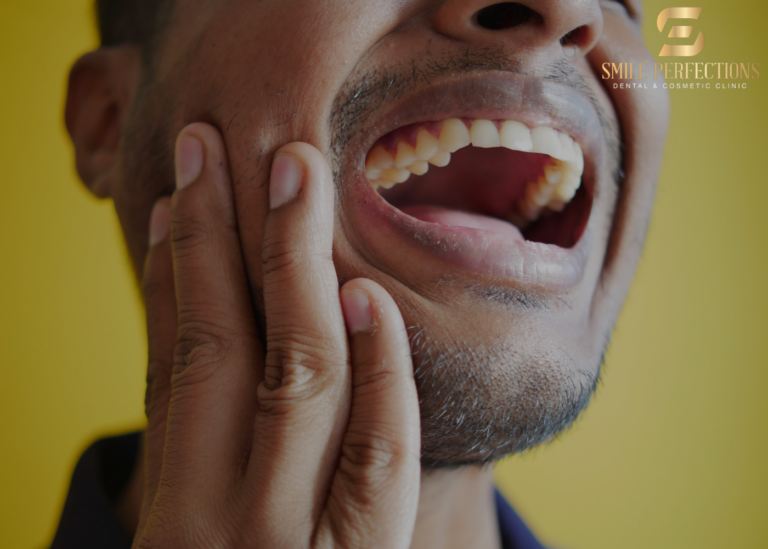
The TMJ is your temporomandibular joint. You have two, one in front of each ear. They connect your lower jaw to your skull and let you open, close and move your jaw from side to side. You use them every time you eat, talk, yawn or swallow.
Problems with the joints, or with the muscles that move them, are known as temporomandibular disorders, or TMD. Many people say “TMJ” to describe the whole thing, and you will see both terms used. The NHS describes TMD as a condition affecting the movement of the jaw, and it is more common than most people think. Around one in 15 people in the UK have it, according to Leeds Teaching Hospitals.
Is jaw clicking normal?
Often, yes. Clicking or popping when you open your mouth is very common, and on its own it is usually not a problem. Many people have a click that stays much the same for years and never causes any trouble.
The click happens when the small disc of cartilage inside the joint moves slightly out of its usual position as you open and close. It is a bit like a knuckle cracking. It does not mean the joint is damaged.
Clicking is more worth looking at if it comes with:
- Pain in the jaw, face, ear or temple
- Locking, where your jaw gets stuck open or closed
- Difficulty opening your mouth fully
- A click that is getting louder, more frequent or more painful
- A grating or crunching sound rather than a simple click
What are the symptoms of TMJ problems?
TMD can show up in different ways. Common signs include:
- Aching in the jaw, particularly when chewing or first thing in the morning
- Pain around the ear, which can feel like an earache even though your ear is fine
- Headaches around the temples
- Clicking, popping or grinding noises
- Stiffness or limited movement
- Jaw locking
- Sore facial muscles
- Worn, flattened or chipped teeth
Symptoms can affect one side or both. They often come and go, and many people find they are worse at times of stress.
What causes jaw pain and clicking?
There is rarely one cause. The usual contributors are:
Teeth grinding and clenching. This is one of the most common. Gripping your teeth together, often at night, overworks the jaw muscles and strains the joint. Many people do not know they do it until a dentist notices worn teeth or a partner hears the grinding.
Stress. Tension tends to travel to the jaw. Stress does not cause TMD on its own, but it often makes clenching and muscle pain worse.
An uneven bite. If your teeth do not meet evenly, your jaw may move into an awkward position to compensate. Missing teeth, crowding or badly fitting dental work can all play a part.
Injury. A blow to the face, whiplash or even a long dental appointment with your mouth held wide can leave the joint sore.
Habits. Chewing gum a lot, biting your nails and chewing pen lids all load the jaw. So does resting your chin on your hand, or cradling a phone between your shoulder and ear.
Arthritis or wear in the joint. Less commonly, the joint itself can wear or become inflamed.
Posture. Neck and shoulder tension can feed into jaw pain, particularly if you spend long hours at a desk.
How can I ease jaw pain at home?
For most people, simple self-care helps. The NHS suggests several approaches. These are the ones we recommend most:
- Eat soft food such as pasta, soup, omelettes and mashed vegetables while the jaw is sore
- Use heat or cold. A warm pack or an ice pack held against the jaw for 10 to 15 minutes, whichever feels better, wrapped in a cloth
- Massage the muscles gently in front of the ears and along the cheeks
- Take simple painkillers such as paracetamol or ibuprofen, if they are suitable for you and used as directed
- Relax your jaw. Keep your lips together and your teeth slightly apart when you are not eating. Teeth should only touch when you chew
- Find ways to unwind. Gentle exercise, a warm bath or breathing exercises can all reduce tension
Things to avoid while it settles:
- Chewing gum, pen tops or your nails
- Biting into large or tough foods with your front teeth
- Yawning or opening very wide
- Clenching your teeth
- Resting your chin on your hand
If you notice yourself clenching during the day, a reminder on your phone or a sticky note on your screen can help you catch it.
How long does it last?
Many cases of TMD settle within weeks to a few months, particularly with self-care and by cutting out the habits that aggravate it. It can also flare up again, often at stressful times. The aim of treatment is usually to keep symptoms under control and protect your teeth, rather than to cure the joint overnight.
When should I see a dentist?
Book an appointment if:
- The pain keeps coming back or lasts more than a couple of weeks
- It affects your eating or your sleep
- Your jaw locks or you cannot open your mouth fully
- You wake with a sore jaw or headache most mornings
- You can see that your teeth are wearing down, chipping or becoming sensitive
- Your jaw has been hurt in an accident
A regular dental check-up is often where we first spot the signs. Flattened biting surfaces, tiny cracks and tender jaw muscles can all point to grinding or clenching. They can show up even if you have no symptoms yet.
When is jaw pain an emergency?
Jaw pain is not always a jaw problem. Call 999 if jaw pain comes with chest pain or tightness, pain spreading down your arm, shortness of breath or sweating. These can be signs of a heart attack.
See a dentist or doctor urgently if you have swelling in your face or jaw, a fever or difficulty swallowing. Do the same if your jaw will not open or close after an injury. A tooth infection can cause jaw pain and swelling, and it needs prompt treatment.
What treatment is available?
Treatment is usually gentle and reversible. Depending on what we find, it may include:
- Advice on habits and self-care, including jaw exercises and relaxation
- A night guard or splint. A custom-made guard sits between your teeth at night. It protects them from grinding and can help the muscles relax. We can talk through whether one would suit you.
- Treating dental causes, such as a high filling, a damaged tooth or a missing tooth that is upsetting your bite
- Restoring worn teeth. If grinding has already worn or chipped your teeth, we may suggest composite bonding or other restorations. If you are considering them, read our guide to teeth covers, which explains why a night guard matters for protecting them
- Bite correction. Where crowding or alignment is part of the picture, straightening with Invisalign can improve how the teeth meet
- Referral. If you need a physiotherapist or a specialist in facial pain, we can point you in the right direction
Surgery is rarely needed and is only considered after other options have been tried.
At Smile Perfections in Oadby, we look at the whole picture: your teeth, your bite, your habits and your comfort. Our clinical team has experience in orthodontics, oral surgery and restorative work, so we can look at jaw problems from several angles.
Medically reviewed by Dr Pratima Pallipatt, Clinical Director at Smile Perfections
Patients frequently ask
Clicking usually happens when the small disc inside the jaw joint moves slightly as you open and close. It is very common and often harmless, especially if it does not hurt or limit your movement.
Not usually. If the click is painless and stays the same over time, it generally needs no treatment. See a dentist if it becomes painful, your jaw locks, or you struggle to open your mouth.
Common causes include clenching, a sore muscle, an uneven bite or an injury. A dental problem such as a cracked tooth or wisdom tooth can also be behind it. A dentist can work out which by examining you.
Stress does not directly cause TMD. But it often makes you clench your jaw and tense your facial muscles, which can bring on or worsen pain.
Often it improves within weeks or months, particularly with self-care. It can return, especially during stressful periods. If it keeps coming back, treatment can help keep it under control.
If you have jaw clicking or pain that is not settling, get in touch. We will examine your jaw and bite, explain what is happening and talk you through the options.
Medical and dental information disclaimer
The information in this article is intended for general educational guidance only and does not constitute personalised dental advice. For concerns about a dark or discoloured tooth, please book an appointment with a qualified dental professional for a proper clinical assessment.
Smile Perfections is a private dental practice in Oadby, Leicester, led by Dr Juttes Pallipatt GDC No. 104499 and Dr Pratima Pallipatt GDC No. 101258. We offer dental check-ups, composite bonding, dental hygienist appointments, Invisalign, porcelain veneers, teeth whitening, dental crowns and smile makeovers.