Gap in front teeth: what causes it and the best ways to close it
Written with input from the clinical team at Smile Perfections in Oadby, led by principal dentists Dr Juttes Pallipatt (GDC 104499) and Dr Pratima Pallipatt (GDC 101258).
Some people love the gap in their front teeth. It’s part of their face, their smile and their personality, and they wouldn’t change it for anything. Others have spent years smiling with their lips closed, wishing it wasn’t there.
Both are completely fine. A gap isn’t something you have to fix. But if it bothers you, or if it has appeared recently, it’s worth understanding why it’s there and what your options are.
The dental name for a gap between teeth is a diastema. It most often shows up between the two upper front teeth, and it’s one of the most common things patients ask us about at consultations here in Oadby.

Is your gap something to worry about?
Before looking at treatments, it helps to work out which group you fall into. Ask yourself these three questions.
Have you always had it? A gap you’ve had since your adult teeth came through is usually down to the size of your teeth or jaw, or the gum tissue between them. It’s normally a cosmetic choice rather than a health problem.
Has it appeared or got bigger recently? A new gap in an adult is different. It can be a sign that teeth are moving because of gum disease, bone loss, a habit like tongue pushing, or a missing tooth elsewhere. This needs checking before any cosmetic treatment.
Is it in a child under 12? Gaps between baby teeth and early adult front teeth are normal. They often close by themselves as the adult canines come through, usually between the ages of 11 and 13. Your dentist will keep an eye on it at routine visits.
If you’re in the second group, book a dental check-up before thinking about closing the gap. Fixing the look without fixing the cause can mean the gap comes back, or that a bigger problem gets missed.
What causes a diastema?
There’s rarely just one reason. These are the causes we see most often.
Teeth that are small for the jaw
If your teeth are slightly smaller than the space available, gaps form naturally. Sometimes it’s just one tooth: the teeth next to the front two (the lateral incisors) can be narrow or peg-shaped, which leaves extra space around them.
A large frenum
The frenum is the small fold of tissue that joins the inside of your top lip to your gum, just above the front teeth. If it’s thick or extends low between the teeth, it can hold them apart. You can check by gently lifting your top lip in the mirror.
Gum disease and bone loss
This is the cause that matters most. When gum disease damages the bone that holds teeth in place, teeth can start to drift and fan outwards, opening up gaps that weren’t there before. Our article on bone loss in teeth explains this in more detail.
Regular visits to the dental hygienist are the best way to prevent gum disease or keep it under control. If your gap is caused by gum problems, those need treating before any cosmetic work.
Habits
Thumb sucking in childhood, pushing your tongue against your front teeth when you swallow, or biting on pens and nails can all push teeth forward and apart over time.
Missing teeth
If a tooth is missing, the teeth around it tend to drift into the space. That movement can create gaps further along.
The main ways to close a gap in front teeth
There’s no single best treatment. The right choice depends on the size of the gap, the cause, the shape and colour of your teeth, and what you want the final result to look like. Here are the main options.
Composite bonding
Composite bonding uses tooth-coloured resin, applied in layers to the sides of the teeth and shaped by hand to close the space. It’s one of the most popular ways to fix a small to medium gap.
- Usually done in a single appointment
- Little or no drilling of your natural teeth
- Can be adjusted, repaired or removed later
- Works best for gaps up to around 2mm, or where the teeth also look slightly small
Bonding does pick up stains over time and may need polishing or touching up. Our guide on how long composite bonding lasts covers what to expect.
Invisalign and other aligners
If your teeth are a good size and shape but just spaced out, moving them together is often the most natural fix. Invisalign uses a series of clear, removable aligners to move teeth gradually.
- Closes the gap using your own teeth, with no added material
- Can also correct other spacing, crowding or bite problems at the same time
- Treatment for a simple front gap can take a few months; more complex cases take longer
At Smile Perfections, Dr Pratima Pallipatt has a special interest in Invisalign and fixed orthodontics. We use an iTero digital scanner, so you can see a preview of how your teeth could move before you commit.
Fixed braces
For larger gaps, or when there are several spaces and bite issues, fixed braces may move the teeth more efficiently. Options range from discreet systems like Six Month Smiles for front teeth to full braces. If you’re weighing up the two approaches, our article on Invisalign vs braces compares them side by side.
Porcelain veneers
Veneers are thin shells of porcelain bonded to the front of the teeth. They can close a gap while also changing the shape, colour and length of the teeth.
- Very natural look and highly stain resistant
- Usually last many years with good care
- Need a small amount of enamel to be removed, so they’re a permanent choice
Veneers make most sense when you’d like to change more than just the gap, for example teeth that are worn, discoloured or misshapen.
Combining treatments
Often the best result comes from more than one step. A common plan is to move the teeth closer with aligners, then use a small amount of bonding to perfect the shape. This keeps the amount of material to a minimum and gives a more natural, balanced smile.
Comparing your options at a glance
Treatment | Best for | How long it takes | Changes your natural teeth? |
|---|---|---|---|
Composite bonding | Small to medium gaps, slightly small teeth | One visit | Little or none; reversible |
Invisalign | Well-shaped teeth with spacing | A few months or more | No, teeth are moved |
Fixed braces | Larger gaps or bite problems | Several months or more | No, teeth are moved |
Porcelain veneers | Gaps plus colour or shape changes | Usually two or three visits | Yes, some enamel removed |
Aligners plus bonding | The most natural all-round result | A few months | Minimal |
Keeping the gap closed
This is the part people often don’t hear about. A diastema between the front teeth has a strong tendency to reopen, especially after orthodontic treatment. Teeth naturally want to drift back towards where they were.
That’s why retainers are so important after aligners or braces. Most people are advised to wear a removable retainer at night long term, and some also have a thin wire bonded behind the front teeth. If a large frenum is the cause, a small procedure to release it may be recommended alongside orthodontic treatment to stop the gap returning.
If the gap was caused by gum disease, keeping your gums healthy is what keeps the result stable. That means good brushing and cleaning between your teeth at home, plus regular hygiene appointments.
What happens at a consultation
A consultation is a chance to talk through what you’d like and find out what’s realistic. At Smile Perfections, we’ll usually:
- Ask what bothers you about the gap and what you’d like your smile to look like
- Check your teeth, gums and bite, and take X-rays if needed to rule out bone loss
- Look at the frenum and any habits that could be involved
- Take a digital scan so we can show you possible results
- Explain each suitable option, how long it takes and the costs, with no pressure to go ahead
Good questions to ask at any consultation include: what’s causing my gap, will it come back, how long will the result last, and what will maintenance involve.
We’re also Dental Phobia Certified and offer sedation, so if nerves have stopped you looking into treatment before, just let us know when you book.
Why patients in Leicester choose Smile Perfections
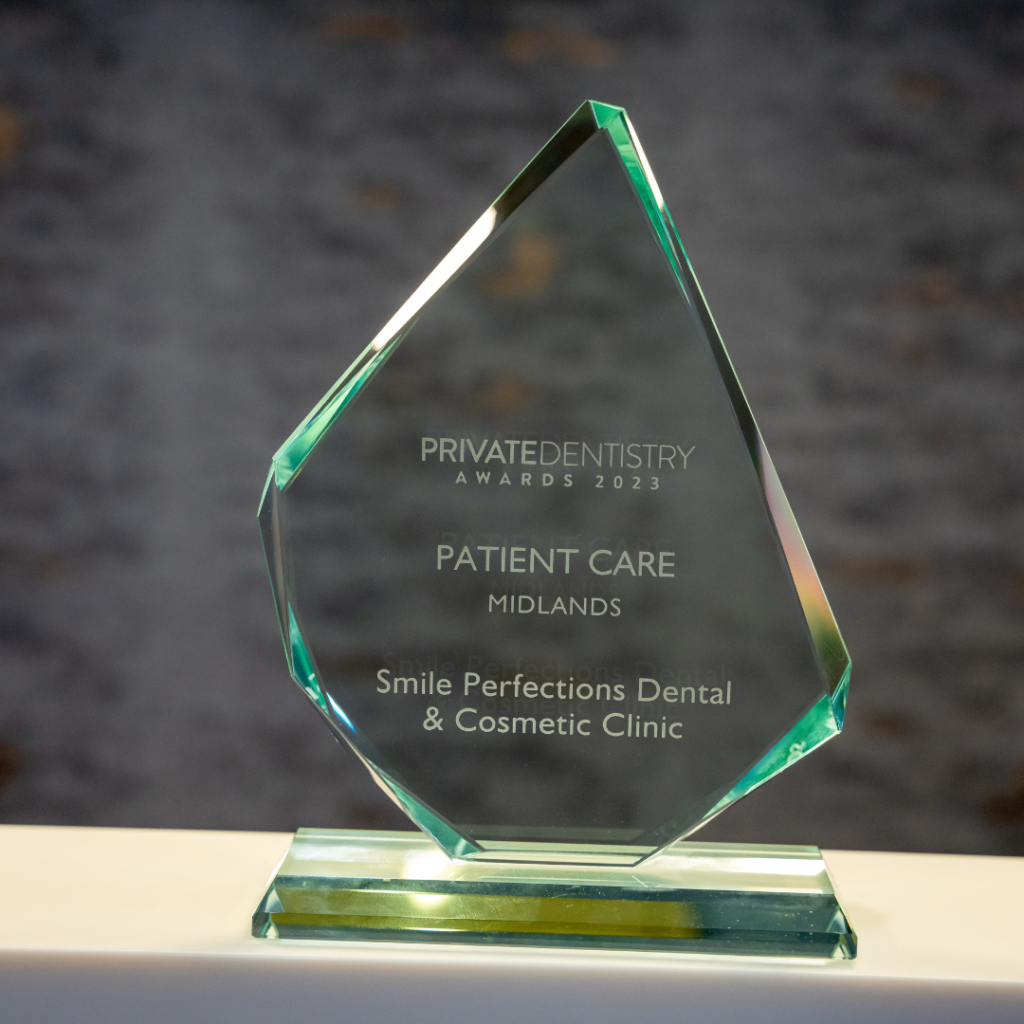
Smile Perfections is a private, family-run dental practice at 34 Harborough Road in Oadby. Our principal dentists, Dr Juttes Pallipatt and Dr Pratima Pallipatt, bring many years of experience in cosmetic dentistry, orthodontics and oral surgery. The practice has been a finalist at the Dentistry Awards and received a Private Dentistry Award for patient care in the Midlands.
What we care about most is honest advice. Sometimes the right answer is a small amount of bonding. Sometimes it’s orthodontics. And sometimes it’s leaving a gap that suits you perfectly well. Either way, we’ll explain your options clearly so you can make the decision that’s right for you.
You can call us on 0116 467 4674.
Patients frequently ask
In children, yes, quite often. Gaps between the front teeth commonly close when the adult canines come through around age 11 to 13. In adults, gaps don’t usually close by themselves and may get larger if they’re caused by gum disease or a habit.
Composite bonding is usually the quickest option, as a small gap can often be closed in a single appointment. Whether it’s the best option depends on the size of the gap and the shape of your teeth.
A gap you’ve always had is usually harmless, though food can sometimes catch in it. A new or growing gap in an adult can be a sign of gum disease or bone loss and should be checked by a dentist.
In most cases, little or no enamel needs to be removed for bonding, which is one of its biggest advantages. The resin is attached to the surface of the tooth and can be adjusted or removed in the future.
It can, if retainers aren’t worn. Gaps between front teeth are known for reopening after treatment, so your dentist will recommend retainers to hold your teeth in their new position long term.
Medical and dental information disclaimer
The information in this article is intended for general educational guidance only and does not constitute personalised dental advice. For concerns about a dark or discoloured tooth, please book an appointment with a qualified dental professional for a proper clinical assessment.
Smile Perfections is a private dental practice in Oadby, Leicester, led by Dr Juttes Pallipatt GDC No. 104499 and Dr Pratima Pallipatt GDC No. 101258. We offer dental check-ups, composite bonding, dental hygienist appointments, Invisalign, porcelain veneers, teeth whitening, dental crowns and smile makeovers.